
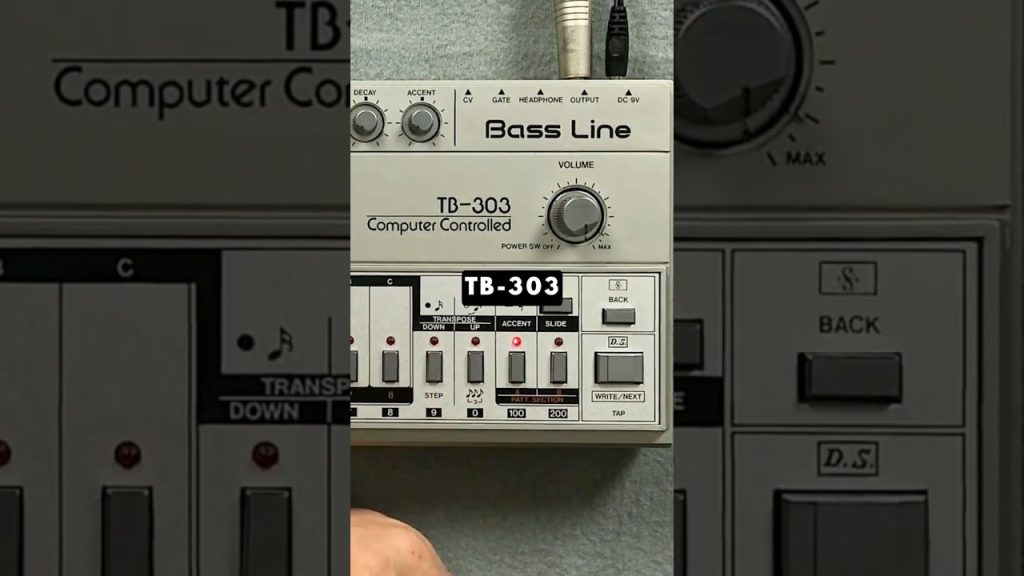
The TB-303 Acid Bassline Explained in 75 Seconds
That squelching, screaming line running through acid house, acid techno and a thousand warehouse raves started life as a failed bass-guitar machine. Roland’s TB-303 flopped in the shops, then Chicago producers twisted its filter into something nobody had heard before. In just over a minute, Cableguys strips the sound down to its parts: one saw or square oscillator, a monophonic voice, a 16th-note pattern with overlapping notes for those gliding slides, a resonant low-pass filter driven by an envelope, and distortion to make it bite. Why it is worth your time: you do not need the original hardware or an expensive clone, because the whole recipe is rebuilt in the free Vital synth. Watch it once, then load Vital, copy the settings, and spend ten minutes riding the cutoff and resonance by hand while the loop runs. Record those moves, because the constant tweaking is what turns a simple pattern into proper acid.
Video: “TB-303: The Sound Of Acid Explained” by Cableguys on YouTube (1:15). All credit to the creator; please like and subscribe to support them.
Get the plugin: Vital (free) or any monophonic synth with a resonant filter
Gear we’d use for this
- Arturia MiniLab 3 – 25 keys, 8 pads and knobs to tweak synths, with Analog Lab and Ableton Live Lite included.
- Akai MPK Mini MK3 – the classic budget beat-maker controller: 25 mini keys and 8 MPC-style pads.
- Audio-Technica ATH-M50x – closed-back studio headphones with punchy, accurate bass for checking kicks and subs.
- Focusrite Scarlett Solo (4th Gen) – a simple, clean USB-C interface for monitors, headphones and one mic or guitar. Works with iPad too.
As an Amazon Associate we earn from qualifying purchases.